Each year, we conduct an extensive review of the best non-custodial wallets available in Australia. To arrive at our picks, we review the best non-custodial wallets on the market for overall safety, functionality, cost and supported digital assets — including coins, tokens and NFTs.
The safest non-custodial wallets are hardware wallets, but we've included a range of options to help you weigh up which is best for your needs.
Billfodl – Bonus: Best recovery phrase back-up device
Our selection of the best non-custodial wallets uses our custom methodology and is updated by our editorial team throughout the year to reflect changes in the market.
"Best for" picks are those we've evaluated to be best for certain product features or categories. If we show a "Promoted" pick, it's been chosen from among our commercial partners based on factors that include special features or offers and the commission we receive.
Keep in mind that these picks are suggestions and that the best non-custodial wallet for you will depend on your individual needs. There are other wallets on the market not included in our picks.
This is not an endorsement of cryptocurrency or any specific provider, service or offering. It is not a recommendation to trade or use any services.
1. Exodus – Best non-custodial wallet for beginners
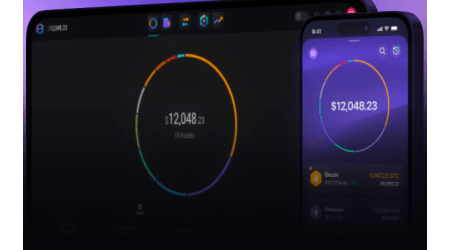
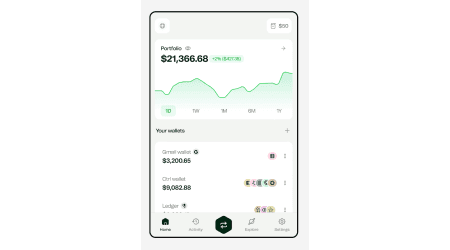
Exodus Wallet is a software wallet for desktop and mobile that provides access to a wide range of cryptocurrencies. While many wallets only let you manage coins on a single network, Exodus supports assets on blockchains including Bitcoin, Ethereum, and Solana. This all-in-one functionality makes it our top wallet pick for beginners.
The wallet has added features like a portfolio overview that help you to oversee your holdings. And if you'd like to top up your portfolio, you can use the wallet's built-in exchange to swap your digital assets.
You can also stake cryptos like Algorand (ALGO) and Cosmos (ATOM) through Exodus.
For added security, you can store the keys to your assets on a Trezor hardware wallet, making it easy to upgrade from one to the other if you decide to go pro.
One of Exodus's most beginner-friendly features is its highly-responsive support staff. If you email them for support, you can expect to hear back within an hour.
Pros
Easy-to-use interface
Supports tokens and coins from a variety of blockchains
Can be used as an interface for Trezor hardware wallets
Great customer support
Cons
Less secure than a hardware wallet
Doesn't support 2-factor authentication
2. NGRAVE ZERO — Safest non-custodial crypto wallet
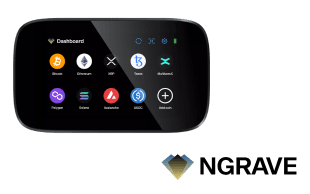
The NGRAVE ZERO is a non-custodial crypto hardware wallet with an EAL7 rating — the highest security rating such a device can earn.
It’s fully air-gapped and allows you to securely store the private keys to digital assets like bitcoin (BTC), ether (ETH), and MATIC as well as ERC-20 or MultiversX (ESDT) tokens offline 100% of the time.
When you want to sign crypto transactions, you use the device in conjunction with the NGRAVE LIQUID app, which is available for both Android and iOS devices.
Downsides to the device include the fact that you can’t use it to stake assets or to interact with DeFi protocols, and it doesn’t support some popular cryptos including cardano (ADA) or polkadot (DOT).
Pros
EAL 7 certification — the highest level of certification for protection against hacks
Enables air-gapped signing for crypto transactions
Randomized generation of private keys offline during set up
The Base App doesn't require a Coinbase account to use it but verified account holders can connect directly to Coinbase's exchange to buy crypto. This seamless integration makes it our pick for the best non-custodial exchange wallet.
The Base App can be downloaded as a mobile app or browser extension and features an easy-to-navigate UI consistent with the Coinbase exchange. The wallet is automatically configured to support many blockchains, including all EVM-compatible chains and Solana.
Security on the Base App is consistent with the industry standard for non-custodial wallets, which means it does come with some counterparty risk. If convenience and easy access to your funds on Coinbase is important to you, then this exchange wallet has a lot to offer.
Pros
Sync directly to Coinbase exchange
Mobile app and browser extension
Preconfigured blockchains
Purchase with selected fiats in-wallet
Coinbase company backing
Cons
Fee for coin swaps in the wallet
No DEX in the wallet, you must connect to an external exchange
With over 30 million monthly active users at the time of writing, MetaMask is a crowd favourite and considered the go to for Web3 apps, making it an easy choice for best non-custodial Web3 wallet.
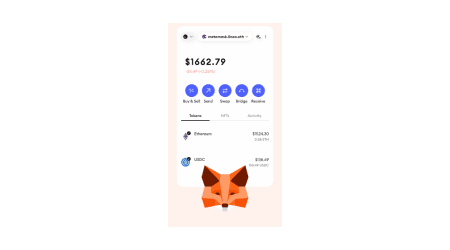
MetaMask was one of the first non-custodial wallets to help open the door to the world of Web3 and DeFi. Operating on both desktop and mobile devices, MetaMask lets you connect to dApps, store NFTs and digital assets and trade cryptos across several different blockchains.
A key feature behind the popularity of MetaMask's Web3 wallet is the ability to buy and sell cryptos without providing any personal information. To start trading on DeFi exchanges you simply install the app or browser extension and log in using your private seed phrase.
Your MetaMask seed phrase acts as a password, login and proof of ownership all in one. Your information is not stored on any database and asset ownership is entirely in your hands; an important element of decentralisation.
Pros
Easy to set up and install
No personal identification required
Supports multiple blockchains, including testnets for dApp development
Supports NFTs on multiple blockchains
Cons
No native Bitcoin support
Incorrect storage of private keys can result in hacks and lost funds
Limited technical support
5. COLDCARD Mk4 — Best non-custodial wallet for Bitcoin
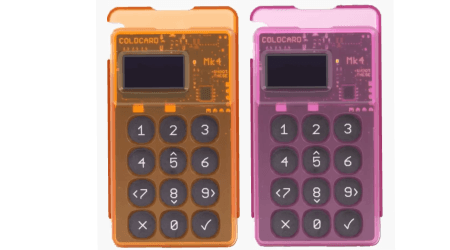
As a specialist Bitcoin cold storage wallet, the COLDCARD Mk4 doesn't have as many of the features of Ledger or Trezor devices, but it does keep the private keys to your BTC stored securely offline.
The COLDCARD Mk4 was created by cypherpunks — technologists who advocate for privacy-enhancing cryptography — for Bitcoin maximalists.
The COLDCARD Mk4 uses not one but two Secure Element chips — the same type of chip found in passports and credit cards — to protect the private keys to your Bitcoin.
Using the Sparrow Wallet desktop software and a microSD card, you can send Bitcoin to and from your COLDCARD Mk4 without ever plugging the device in. The obvious downside to this is that you'll have to purchase a microSD card adapter for your computer if you plan to transfer data this way.
Pros
Highly secure
Contains 2 Secure Element chips
Doesn't require a connection to computer
Features a high-contrast 128 x 64 pixel screen for messaging
Multisig enabled
Cons
Only supports BTC
The user interface for Sparrow Wallet is less intuitive than competitor alternatives
You will have to purchase a microSD card adapter for your computer if you prefer to transfer data via the card
6. Sparrow Wallet — Best non-custodial desktop wallet for Bitcoin
Sparrow is a Bitcoin-only desktop wallet that offers various functionalities.
You can either use it exclusively as a hot wallet, or you can use it as an interface for a hardware wallet. It works great with a wallet like the COLDCARD Mk4.
If you’re an advanced Bitcoiner, you can also use Sparrow to create a multisig (short for multisignature) vault, which requires multiple parties or devices to sign off on Bitcoin transactions. Multisig vaults provide extra protection for the bitcoin you HODL.
Also, Sparrow lets you connect to any Bitcoin node that you may be running.
However you use Sparrow, its capabilities combined with its clean and simple interface make it a go-to for any level of Bitcoin enthusiast.
Pros
Can be used as a hot wallet or in conjunction with a hardware wallet
Supports multisig vaults
Lets you label transactions
Can connect to any type of Bitcoin node
Cons
There is no mobile app version of the wallet
Using the wallet’s advanced features can be challenging
Reported slow customer support response times
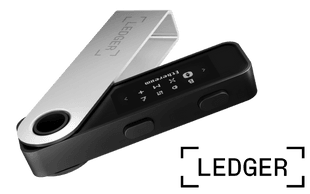
7. Ledger Nano S Plus — Best non-custodial wallet for staking
The Ledger Nano S Plus can be used to stake a variety of crypto assets.
You can use the native Ledger Live interface with any Ledger hardware wallet to stake 9 different cryptos – including ether (ETH) and solana (SOL).
To stake an even greater assortment of digital assets, you can sync your Nano S Plus hardware wallet with third-party apps like MetaMask or Yoroi and use these software wallets as a bridge to staking interfaces.
However, please note that there’s risk involved with using third-party apps in the decentralized finance (DeFi) space. Malicious code was recently introduced into the software that allows DeFi protocols to connect to Ledger wallets, resulting in $484,000 worth of Ledger users’ digital assets being stolen.
No assets that were staked via Ledger Live — without third-party software — were impacted.
Also, keep in mind that Ledger’s software is closed-source. This means that it’s not open to independent scrutiny, and you must place some degree of trust in the manufacturer.
Pros
Manage over 5,500 crypto assets
Stake up to 9 cryptos via Ledger Live
Can be synced with third-party software apps like MetaMask
Cons
Not compatible with iOS
Ledger’s software has been hacked
Closed-sourced software
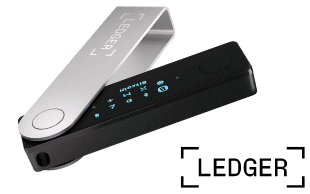
8. Ledger Nano X — Best on-the-go non-custodial hardware wallet
The Ledger Nano X is a USB-style hardware wallet that’s Bluetooth enabled and can be used in conjunction with either Android or iOS mobile devices.
This makes it a great travel companion, as it allows you to carry with you the private keys to 5,500 crypto assets as well as NFTs.
And you can stake up to 9 crypto assets using the device’s native software — Ledger Live — which is available for both desktop and mobile devices.
Mind you, while Ledger devices have not had any recorded security breaches, the software is closed-source. This means that it is not open to independent scrutiny, and you must place some degree of trust in the manufacturer.
Pros
Manage over 5,500 crypto assets
Stake up to 9 cryptos via Ledger Live
Can be synced with third-party software apps like MetaMask
Cons
Not compatible with iOS
Ledger’s software has been hacked
Closed-sourced software
9. XDEFI Wallet – Best non-custodial wallet for NFTs
XDEFI is a blockchain-agnostic wallet that lets you showcase NFTs from more than 30 different blockchains side-by-side. It's this breadth that's made it our top pick if you're looking for a dedicated non-custodial NFT wallet.
The wallet's streamlined, cross-chain UI makes sending, receiving and trading NFTs and cryptos across blockchains simple and user-friendly.
Once the browser extension is installed, accounts can be set up directly in XDEFI or imported from external wallets. Preconfigured blockchains include ETH, BNB Chain, Arbitrum, Thorchain, Bitcoin and more.
XDEFI also gives you the ability to complete in-wallet swaps and purchase cryptos using any currency through its fiat onramp.
Holders of the wallet's own token, XDEFI, can stake their holdings to earn trading rebates and collect utility NFTs.
Pros
View NFTs and assets across different blockchains in a single gallery
Easily import custom tokens
Earn rewards through staking XDEFI token
Swap crypto assets across chains using the internal swap feature
Cons
Value of staking incentives depends on performance of the XDEFI token
Sell-to-fiat feature not currently supported
Browser extension only, mobile app not available
Sometimes balances take hours to appear in the wallet interface
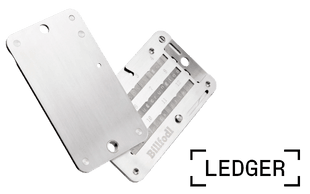
Bonus: Billfodl — Best recovery phrase backup device
We chose to give Billfoldl an honourable mention as the best recovery phrase backup device because it helps protect your chosen hardware wallet's recovery phrase from fire, flooding and any type of decay.
Most hardware wallets will prompt you to write down your recovery phrase on a sheet of paper when you set up your wallet. But if your recovery phrase sheet gets damaged or lost, you can lose access to your crypto – permanently.
Billfodl is a solid steel case that allows you to stamp your 24-word recovery phrase using metal tiles engraved with letters.
The tiles slide into three different rows on both sides of the device, and the device comes with a cover that swivels over your recovery phrase once you've properly arranged the tiles.
It's worth considering the added layer of security and peace of mind afforded by recovery phrase backup devices like Billfodl if you invest in a hardware wallet.
Pros
Preserves your recovery phrase much better than paper and pen solutions
Reasonably priced
Cons
Slightly bulky design
Sliding tiles into place can be a clumsy experience
What is a non-custodial wallet?
A non-custodial wallet is a crypto wallet that you use to store the private keys to the digital assets that you own.
A common misconception about non-custodial wallets is that your digital assets are stored in the wallet. This isn't the case, though. The wallet stores your private keys to your digital assets, which are stored on blockchains.
You'll know you are using a non-custodial wallet if you've written down a 12- to 24-word seed phrase – sometimes called a recovery phrase – for the wallet when you set it up.
This seed phrase is what you would use to recover your wallet in the event that you ever lost the physical device and needed to recover the private keys stored in the wallet.
Some non-custodial wallets are software wallets, which remain connected to the internet at all times. Examples of non-custodial software wallets include Exodus Wallet and MetaMask.
Other non-custodial wallets are hardware wallets, which remain mostly disconnected from the internet. These wallets include Ledger, Trezor and COLDCARD devices. You only connect them when you need to use the wallet.
The offline storage of private keys that hardware wallets provide is sometimes called cold storage.
Why are non-custodial wallets important?
When you leave the crypto you've purchased in the custody of a centralized exchange like Coinbase or Binance, you don't technically own it. Instead, you only own an IOU for it, and that IOU is only as good as the solvency of the exchange that holds it for you.
Crypto has a chequered history when it comes to insolvent exchanges, including high profile cases like Mt Gox and FTX. While security has improved over time, there will always be a risk associated with leaving your crypto on an exchange.
To actually take ownership of the digital assets you've purchased, you have to move the assets from the custody of an exchange to a non-custodial wallet — a wallet that lets you hold your assets' private keys.
When using non-custodial wallets, it’s good practice to pair any software wallet with a hardware wallet for added security and to use multisignature protection when possible.
🔑 What is a private key?
A private key is sometimes referred to as a secret key.
Private keys are long, randomly generated strings of letters and numbers that cannot easily be guessed. They can be used to access cryptographically encoded information when paired with a public key counterpart.
Private keys should be stored securely in secret locations.
Custodial vs. non-custodial wallets
The following are some differences between custodial and non-custodial wallets.
Custodial wallets
Non-custodial wallets
The private keys to digital assets are held by a third party (e.g. a crypto exchange)
Sometimes referred to as "hot wallets", these are always connected to the internet
They do not require you to write down a 12- to 24-word seed recovery phrase
Funds stored in custodial wallets are technically IOUs and are only as good as the solvency of the custodian's company
The private keys to digital assets are held by the owner of the assets
The hardware versions of these wallets are sometimes referred to as "cold storage wallets", as they remain mostly disconnected from the internet
They require you to write down a 12- to 24-word seed recovery phrase
Funds stored in a non-custodial wallet are the actual digital assets, which can be accessed via the blockchain
How do I know if I'm using a non-custodial wallet?
You'll know that you are using a non-custodial wallet if you've written down a 12- to 24-word seed phrase – or recovery phrase – when setting up the wallet.
If you weren't prompted to write down such a phrase, then you are using a custodial wallet and the private keys to your digital assets aren't in your control.
Non-custodial wallet pros and cons
Pros
Having actual ownership of your digital assets
Not relying on the solvency of a third-party custodian (e.g. a centralised crypto exchange)
Being able to use your digital assets in decentralised applications (dapps)
Cons
You bear full personal responsibility for managing the private keys to your digital assets
There may be an initial cost to you if you decide to purchase a hardware wallet
How to choose the best non-custodial wallet
There are a number of factors to consider when choosing the best non-custodial wallet for your needs.
Software vs hardware. Custodial software wallets are always connected to the internet and are therefore less secure. Non-custodial hardware wallets remain mostly disconnected from the internet and are therefore more secure.
Price. Non-custodial software wallets are often free to download, while you have to purchase a non-custodial hardware wallet.
Features. Consider whether you want to do more than just hold the private keys to your digital assets in your own custody. Some non-custodial wallets allow you to stake your digital assets or put them to work through dapps.
User interface (UI). You might want to test a few non-custodial wallets out or watch some YouTube videos on them before deciding on which has the UI that's right for you.
Ask the experts: What are the most important features in a crypto wallet, besides security?
Expert insight: Check the interface
"A wallet should have an intuitive and easy-to-use interface, making it accessible to both beginners and experienced users. The ability to store and manage a variety of cryptocurrencies is crucial, as the crypto market consists of numerous digital assets. A good wallet should provide a reliable backup and recovery system to protect against data loss or theft of the wallet's private keys. Access to transaction history and reporting features is essential for tracking your cryptocurrency holdings and activities."
Paul Levy
Senior Lecturer, University of Brighton
Expert insight: Check for interoperability
"Interoperability with web3-enabled sites is probably the most important feature after security for crypto wallets today. WalletConnect makes it possible to use a wide range of wallets to interact with web3 sites. Cross-chain compatibility and the ability to do swaps inside the wallet can also make life a lot easier."
Ruadhan O
Creator, Seasonal Tokens
Expert insight: Check security features
"The wallet should be easy to use and navigate. Users should be able to easily send, receive, and store their cryptocurrencies. The wallet should support the cryptocurrencies that users want to use. Multi-signature wallets require multiple signatures to authorize transactions. This makes them more secure than single-signature wallets.Cold storage wallets allow users to store their cryptocurrencies offline. This is the most secure way to store cryptocurrencies, as it protects them from hackers. Some crypto wallets offer additional features, such as staking, lending, and decentralized exchange (DEX) integration."
Mitesh Shah
Founder & CEO, Omnia Markets
Risks of using a non-custodial wallet
Consider the following risks in using a non-custodial wallet:
Personal responsibility. You bear the responsibility of writing down and securely storing your 12- to 24-word seed phrase.
Sending assets to the wrong address. You run the risk of potentially transferring your assets to the wrong address when trying to send them.
Inputting wrong passcode. It's possible to get locked out of a hardware wallet if you enter the wrong passcode for it enough times. In this case, you'd have to purchase a new hardware wallet and regain access to the private keys for your digital assets by using your 12- to 24-word seed phrase when setting up the new wallet.
Internet connectivity. Software wallets are always connected to the internet, and, for that reason, can more easily be hacked. Also, if the code for a software wallet is closed-source, you are placing trust in the creator of that wallet to not extract your private keys and, therefore, gain access to the digital assets you manage via the wallet.
Software vulnerabilities. Hardware wallets are generally more secure than software wallets in that they remain disconnected from the internet when they aren’t in use, while some never have to be connected to the internet. However, if you use a hardware wallet that has native software — like a Ledger or Trezor wallet — there is always the risk that your private keys can be extracted through an issue with the underlying software.For extra safety, it’s best to create a multisignature — or “multisig” — set up in which you use two or more wallets to sign transactions and protect your crypto.
Bottom line
If you choose to take personal responsibility for the private keys to the digital assets you've purchased, you'll need to learn how to use a non-custodial wallet.
Taking self-custody of the private keys to your digital assets can be an empowering experience, but it's important to do your research to choose the non-custodial wallet that's best for you.
You'll need to consider a number of factors like whether you'd like to use a software or hardware wallet as well as which features you'd like your non-custodial wallet to have.
By building a deeper understanding of secure digital asset storage and comparing a number of the best crypto wallets on the market, you'll be in a better position to keep your crypto investments safe.
Methodology
To evaluate our 2026 picks for the best non-custodial wallets, we compared wallets on a range of criteria, including the following:
Supported cryptos and blockchains. Is the wallet compatible with a wide variety of coins, tokens and blockchains?
User experience. Is there a steep learning curve to using the wallet, or is it suitable for beginner crypto investors?
Security. Does the wallet offer offline cold storage or other seed-phrase back-up options?
Value for money. Does the wallet have any upfront or ongoing costs, and if so, how does it compare to similar wallets on the market?
Extra features. Does the wallet offer other features like NFT support, staking and in-wallet buying features?
Mobile functionality. Can you manage your portfolio on the go through a smartphone or other device?
Web3 accessibility. Does the wallet support access to Web3 and decentralised applications (dapps)?
Crypto wallets market update: January 2024
Crypto Wallet Market Research Report for 2024. According to the report, the global crypto wallet market is expected to experience significant growth from 2024 to 2031, marking a period of considerable expansion within the industry.
Ledger ‘Recover’ launches. Ledger has finally launched its controversial recover service for the Nano X. It involves encrypting a seed phrase and breaking it up into three pieces, each held with a different third-party custodian: Ledger, Coincover and an independent backup service provider.
New MetaMask security feature. MetaMask has partnered with Blockaid to add a the new Privacy Preserving Offline Module (PPOM) to the popular Web 3 wallet. It helps determine if a smart contract is malicious and sends the user a warning. It is currently an opt-in feature.
Over 80% of BTC wallets in profit. Research by Glassnode shows that with Bitcoin returning to $34,000, over 80% of wallets are now in profit.
James Edwards is the global cryptocurrency editor at Finder. He is a regular contributor to Nasdaq and is frequently called upon for market commentary in Australia and abroad.
FAQs
Can a non-custodial wallet be hacked?
Yes, non-custodial wallets can be hacked.
Software wallets are susceptible to common attacks such as phishing scams like any other internet-connected service.
No user's hardware wallet has ever been successfully hacked, but research has proven that there have been hackable flaws in the designs of some earlier iterations of hardware wallets.
What is the safest non-custodial wallet?
The safest non-custodial wallets tend to be crypto hardware wallets, as they remain mostly disconnected from the internet.
Is Coinbase a non-custodial wallet?
Coinbase offers both custodial and non-custodial wallets to its customers.
The exchange's custodial wallet is the wallet that the exchange provides to you automatically when you purchase digital assets via the Coinbase exchange.
Coinbase's non-custodial wallet is a browser extension product called Base App.
Unlike when you use its exchange service, Base App will prompt you to write down a 12- to 24-word seed phrase.
Sources
Disclaimer: Cryptocurrencies are speculative, complex and involve significant risks – they are highly volatile and sensitive to secondary activity. Performance is unpredictable and past performance is no guarantee of future performance. Consider your own circumstances, and obtain your own advice, before relying on this information. You should also verify the nature of any product or service (including its legal status and relevant regulatory requirements) and consult the relevant Regulators' websites before making any decision. Finder, or the author, may have holdings in the cryptocurrencies discussed.
Frank is a cryptocurrency expert whose work aims to simplify the complexities of this evolving space for a broad audience. His byline has appeared in Forbes and Bitcoin Magazine. Frank holds multiple advanced degrees, including an MBA in Finance from Pace University and a Master of Social Work from Hunter College. Frank was a Cryptocurrency Writer at Finder from 2022 to 2024.
See full bio
See how the Trezor One compares in the world of crypto hardware wallets.
Important information about this website
Finder makes money from featured partners, but editorial opinions are our own.
Finder is one of Australia's leading comparison websites. We are committed to our readers and stand by our editorial principles.
We try to take an open and transparent approach and provide a broad-based comparison service. However, you should be aware that while we are an independently owned service, our comparison service does not include all providers or all products available in the market.
Some product issuers may provide products or offer services through multiple brands, associated companies or different labeling arrangements. This can make it difficult for consumers to compare alternatives or identify the companies behind the products. However, we aim to provide information to enable consumers to understand these issues.
We make money by featuring products on our site. Compensation received from the providers featured on our site can influence which products we write about as well as where and how products appear on our page, but the order or placement of these products does not influence our assessment or opinions of them, nor is it an endorsement or recommendation for them.
Products marked as 'Top Pick', 'Promoted' or 'Advertisement' are prominently displayed either as a result of a commercial advertising arrangement or to highlight a particular product, provider or feature. Finder may receive remuneration from the Provider if you click on the related link, purchase or enquire about the product. Finder's decision to show a 'promoted' product is neither a recommendation that the product is appropriate for you nor an indication that the product is the best in its category. We encourage you to use the tools and information we provide to compare your options.
Where our site links to particular products or displays 'Go to site' buttons, we may receive a commission, referral fee or payment when you click on those buttons or apply for a product.
When products are grouped in a table or list, the order in which they are initially sorted may be influenced by a range of factors including price, fees and discounts; commercial partnerships; product features; and brand popularity. We provide tools so you can sort and filter these lists to highlight features that matter to you.
Please read our website terms of use and privacy policy for more information about our services and our approach to privacy.
We update our data regularly, but information can change between updates. Confirm details with the provider you're interested in before making a decision.
How likely would you be to recommend Finder to a friend or colleague?
0
1
2
3
4
5
6
7
8
9
10
Very UnlikelyExtremely Likely
Required
Thank you for your feedback.
Our goal is to create the best possible product, and your thoughts, ideas and suggestions play a major role in helping us identify opportunities to improve.
The information provided by Frankie is general in nature and has been prepared without considering your objectives, financial situation or needs. Frankie may make mistakes so it's important that you review the information before deciding. By messaging Frankie, you agree to our Terms and have read our Privacy Policy.